
Print Ship USA
5/15/2026
Navigating the Printing Landscape
When preparing to print marketing materials, you'll inevitably encounter two main printing technologies: offset and digital. Both methods offer excellent results, but understanding the differences between them is crucial for choosing the most cost-effective and appropriate option for your specific project.
What is Offset Printing?
Offset printing (or offset lithography) is the traditional gold standard of commercial printing. It involves transferring an image from a metal plate to a rubber cylinder (the "blanket"), and then rolling that image onto a sheet of paper. It's called "offset" because the ink is not transferred directly onto the paper.
Offset presses require significant setup time to create the custom metal plates for each color (Cyan, Magenta, Yellow, and Black). However, once the press is running, it can print thousands of sheets very quickly.
What is Digital Printing?
Digital printing is a more modern method that eliminates the need for printing plates. Similar to your home or office printer, digital presses apply ink directly onto the paper using lasers or inkjet technology.
Because there is no plate setup, digital printing requires minimal setup time, making it much faster to get the first print off the press.
Comparing the Two: When to Use Which
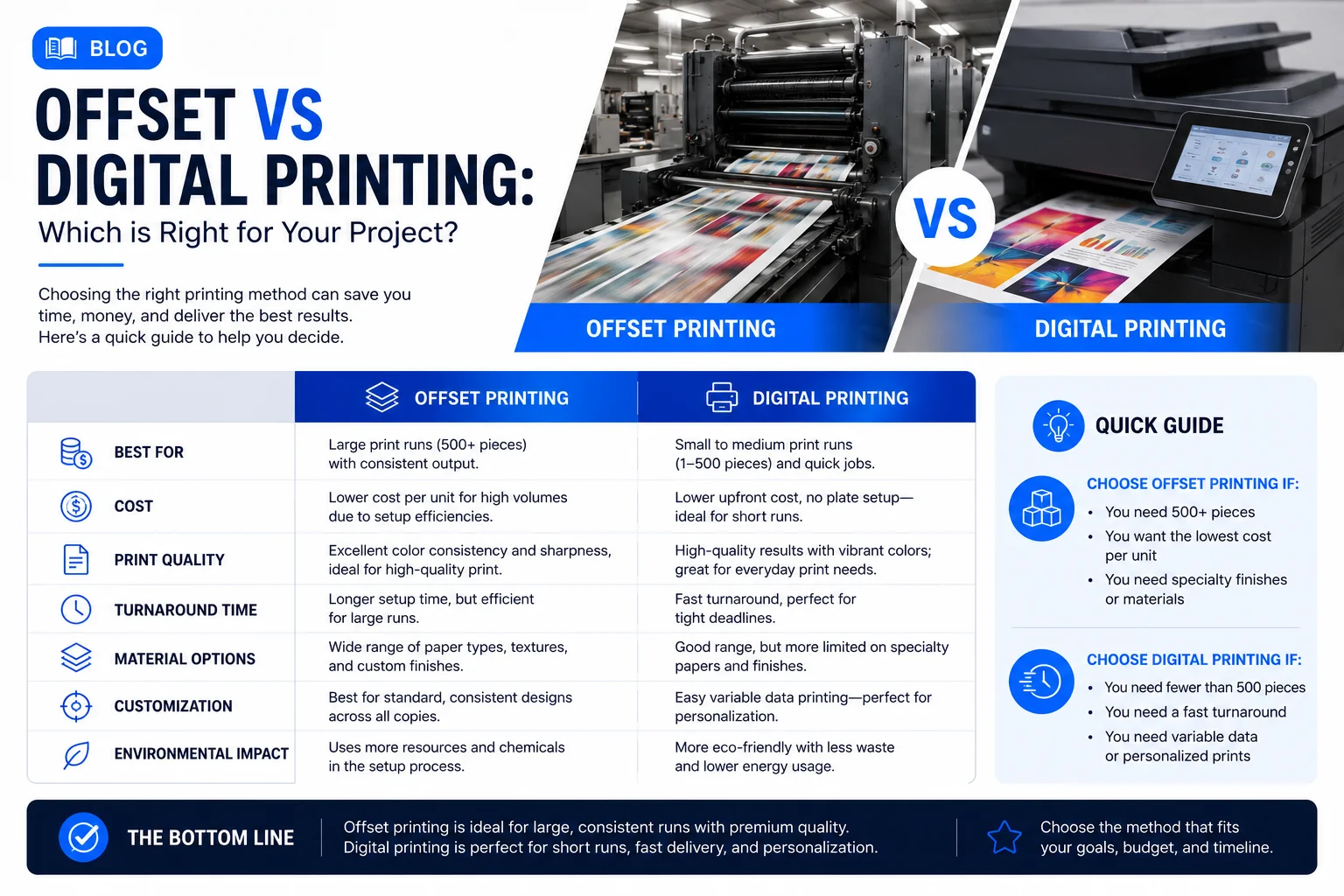
1. Quantity
Digital: Best for short runs (typically 1 to 500 copies). Because there are no setup costs for plates, the unit cost for low quantities is much lower than offset.
Offset: Best for large runs (1,000+ copies). The initial setup cost is high, but once the press is running, the cost per unit drops dramatically. The more you print, the cheaper each piece becomes.
2. Quality and Color Accuracy
Offset: Historically offered superior image quality and exact color matching. If you need precise Pantone (PMS) color matching for strict brand guidelines, offset is the way to go.
Digital: Modern digital presses produce quality that is nearly indistinguishable from offset. While they rely on CMYK mixing and cannot technically print true Pantone colors, they can simulate them very closely.
3. Turnaround Time
Digital: Wins hands down for speed. If you need flyers printed by tomorrow, digital is your only option.
Offset: Requires time to create plates and set up the press. The ink also needs time to dry before cutting and folding. Turnaround times are typically several days to a week.
4. Variable Data
Digital: If your project requires variable data—like printing a different name or address on each postcard—you must use digital printing. Offset plates cannot be changed once they are made.
Conclusion
The choice between offset and digital usually comes down to quantity. For small batches or fast turnarounds, choose digital. For high-volume runs where unit cost and precise color matching are paramount, choose offset.